

What to Know About an EOS Scan
Contributor: Pediatric Radiologist - Delma Jarrett, M.D.
With the opening of our Hudson Yards location, Weill Cornell Imaging introduced our first EOS scanner, bringing advanced imaging technology designed to evaluate spinal and lower body alignment with high precision and less radiation.
What Is EOS Imaging?
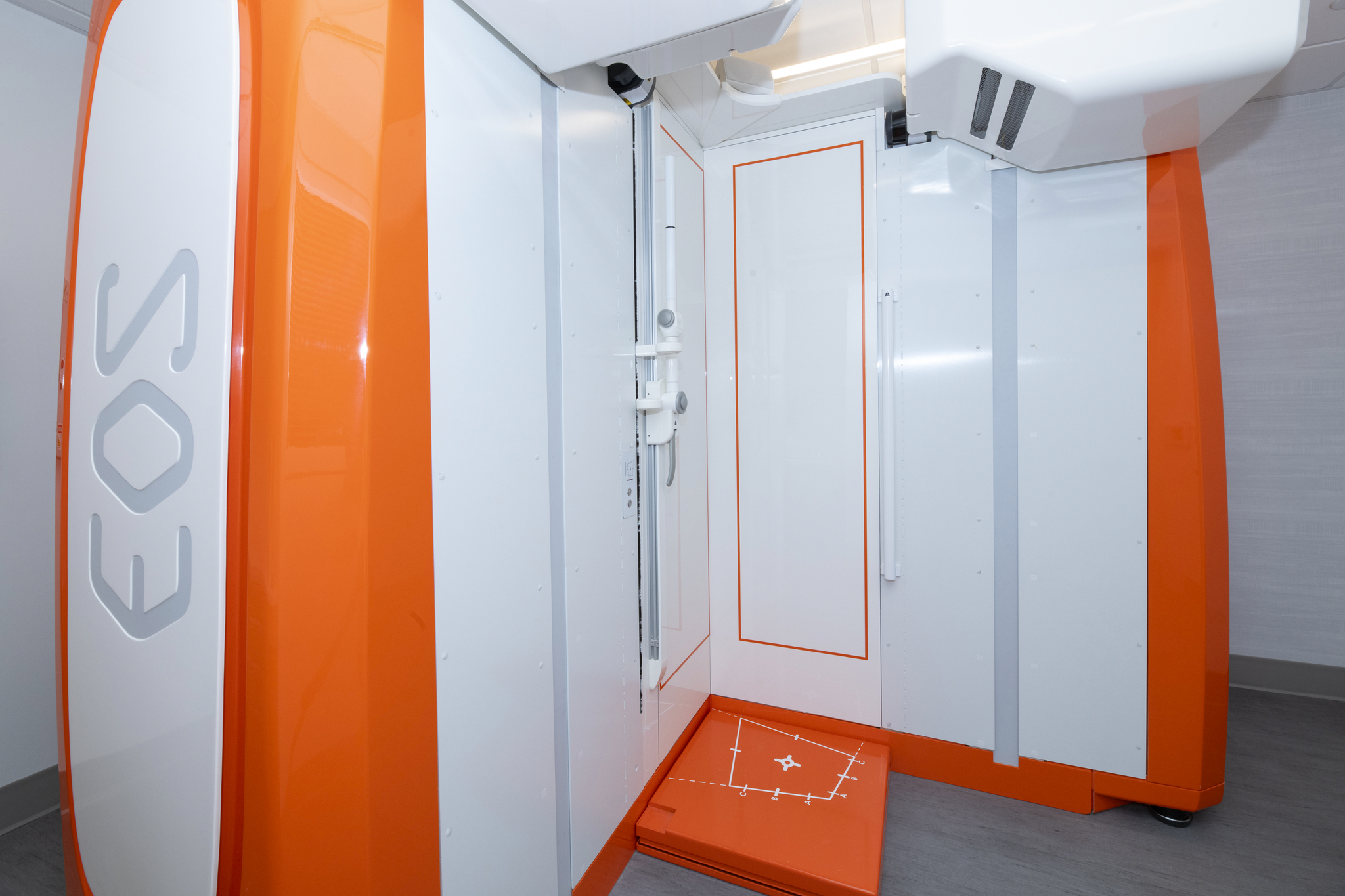
Understanding your body’s alignment starts with the right imaging. EOS is a specialized, low-dose X-ray that captures detailed images of your spine and legs while you stand in a natural position. This allows doctors to evaluate how your body aligns under normal weight-bearing conditions.
Why You Might Need an EOS Exam
EOS imaging is commonly used to diagnose and monitor conditions of the spine, hips and legs, including:
- Scoliosis evaluation - Measures spine curvature and tracks changes over time
- Leg length differences - Determines whether one leg is shorter than the other
- Alignment problems - Evaluates how the hips, knees, and ankles line up
What Can You Expect During the EOS Exam?
- You'll stand or sit inside an open, booth-like scanner
- You will be asked to stay very still while the X-ray beam moves across your body
- The scan takes just 15-20 seconds
What are the Benefits of an EOS Exam?
EOS imaging uses significantly less radiation than traditional X-rays, making it especially helpful for children and patients who require frequent imaging. Because the scan captures the body while standing naturally, providers can see how the bones and joints align during everyday movement, helping support more accurate diagnoses and treatment planning.
The Bottom Line
When it comes to your health, clear answers matter. EOS imaging provides a fast, detailed view of how your body is aligned from head to toe, helping your care team make more informed decisions for you.
Contributor: Pediatric Radiologist - Delma Jarrett, M.D.